FLAG COLLECTION
Flags With Plants and Trees (24)
24 flags carry a plant, and this is one of the most reliable clues in flag identification. Countries pick a species precisely because it is theirs: a tree that grows there, a crop the economy was built on, or a branch that carries a meaning everyone already recognises. Name the plant and you can usually name the country.
Last updated 1 July 2026

Canada
North America
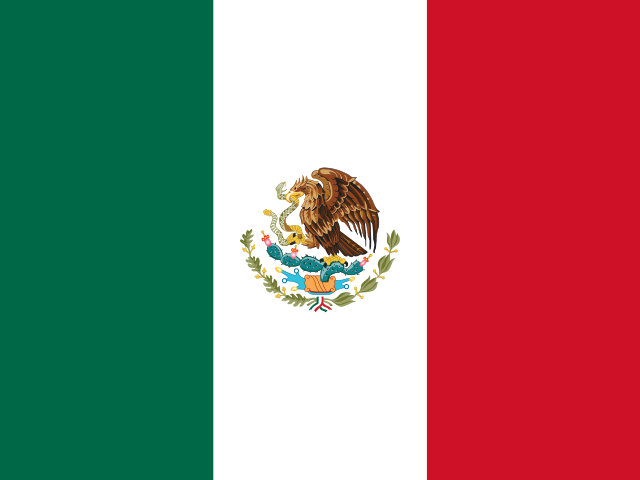
Mexico
North America

Belize
North America

British Indian Ocean Territory
Africa

Cocos (Keeling) Islands
Oceania
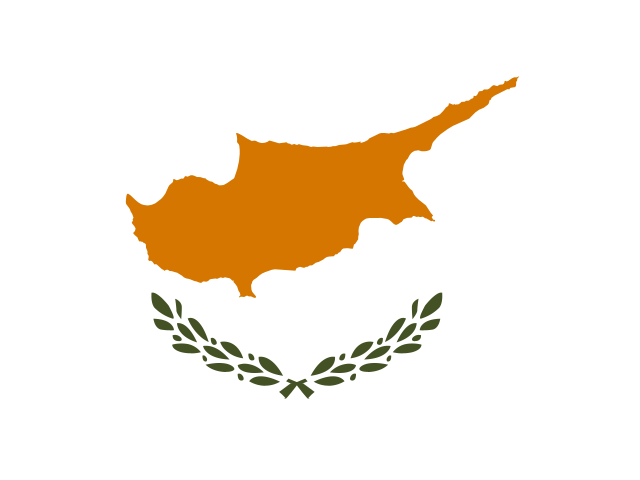
Cyprus
Europe

Equatorial Guinea
Africa

Eritrea
Africa

Grenada
North America

Guam
Oceania

Guatemala
North America
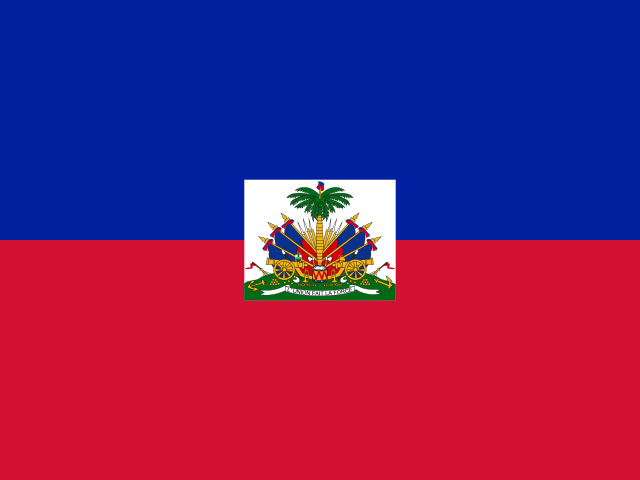
Haiti
North America
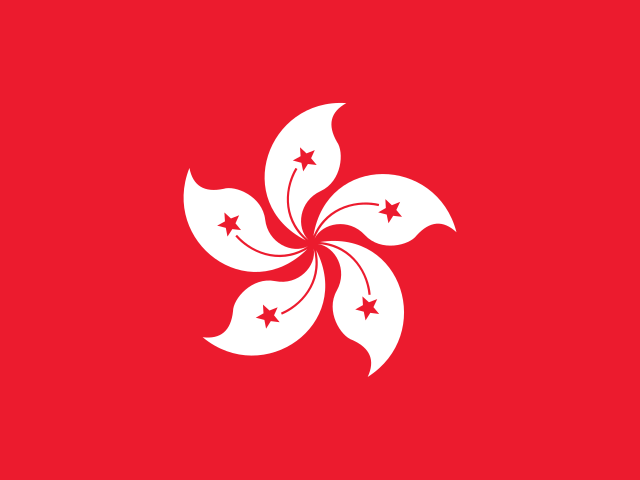
Hong Kong
Asia

Lebanon
Asia

Macau
Asia

Mozambique
Africa

Norfolk Island
Oceania

Paraguay
South America
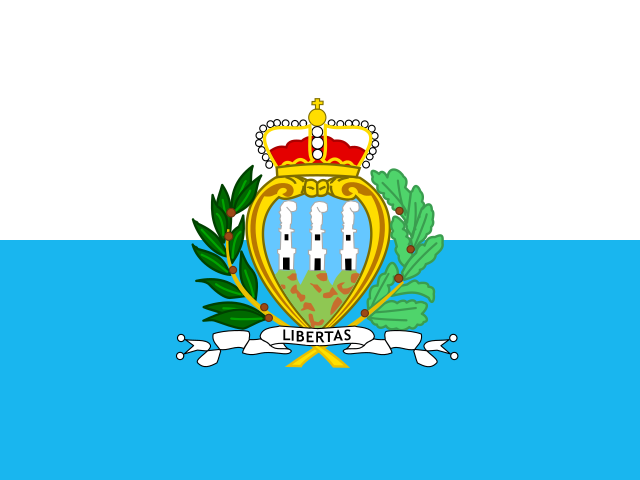
San Marino
Europe

Sri Lanka
Asia

Turkmenistan
Asia
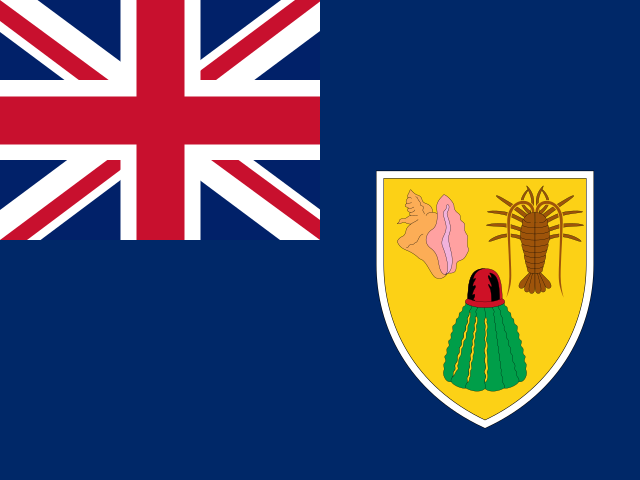
Turks and Caicos Islands
North America

United States Virgin Islands
North America

Vanuatu
Oceania
Where these 24 flags are in the world
Counting by continent is the quickest way to see whether a design tradition is regional or global. North America accounts for the largest share of this collection with 8 of the 24.
| Continent | Flags | Share |
|---|---|---|
| North America | 8 | 33% |
| Asia | 5 | 21% |
| Africa | 4 | 17% |
| Oceania | 4 | 17% |
| Europe | 2 | 8% |
| South America | 1 | 4% |
The national species
Canada's eleven-point maple leaf is the most recognisable plant on any flag, adopted in 1965 after decades of argument over whether to keep the Union Jack in the design. Lebanon's cedar has been a symbol of the region since antiquity and appears in the Hebrew Bible. Equatorial Guinea shows a silk-cotton tree, where a treaty with Spain was signed. Haiti's arms are topped by a royal palm. Norfolk Island's flag is dominated by the pine that grows there and is named after the island.
Crops, and what they say about an economy
A second group shows what the country grows or grew. Fiji's shield carries sugar cane, a coconut palm and bananas. Belize's arms are flanked by mahogany, the timber the colonial economy was built on. Grenada's flag shows a nutmeg, which once accounted for a substantial share of world supply. These flags are unusually honest documents: they name the industry that paid for the country's independence.
The olive branch means the same thing everywhere
Cyprus places two olive branches beneath a copper-coloured silhouette of the island. Eritrea's flag has an olive branch inside a wreath. The United Nations flag frames the world in the same branches. Unlike a maple leaf or a nutmeg, the olive branch is not a claim about local flora — it is a borrowed classical symbol for peace, and it reads that way on every flag that uses it.
Still not the flag you were thinking of?
This page is one fixed filter. The full flag finder lets you combine colours, symbols, patterns and continent at the same time, which narrows things down far faster than any single clue. You can also browse every country guide alphabetically, or spin for a random one and read its guide instead.