Countries in Asia
50 countries and territories holding 4.79 billion people — 58.9% of everyone alive. Spin the wheel for a random Asian country, or browse the full list below.
12 countries are on the wheel right now.
Press Spin and the pointer decides where you are going.
Twelve of 50 countries are loaded at a time so every wedge stays readable. Shuffle for a fresh twelve, or spin the wheel you have.
Asia at a glance
50
Countries & territories
46
Sovereign states
4.79 billion
Total population
58.9%
Share of world population
32,138,141 km²
Combined land area
12
Landlocked
6
No land border
41
Official languages
All countries in Asia (A–Z)
Every entry below opens a full guide with the capital, population, land area, languages, currency, neighbouring countries and a map. 46 of these 50 are sovereign states; the rest are territories, dependencies and overseas regions.
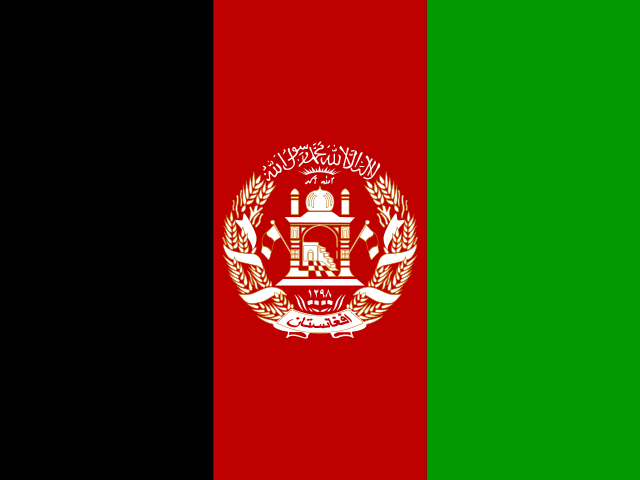
Afghanistan
Kabul
42.6 million

Armenia
Yerevan
3.0 million
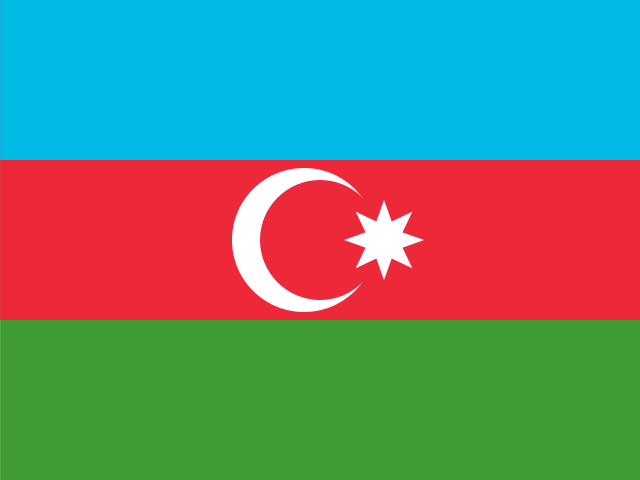
Azerbaijan
Baku
10.2 million

Bahrain
Manama
1.6 million
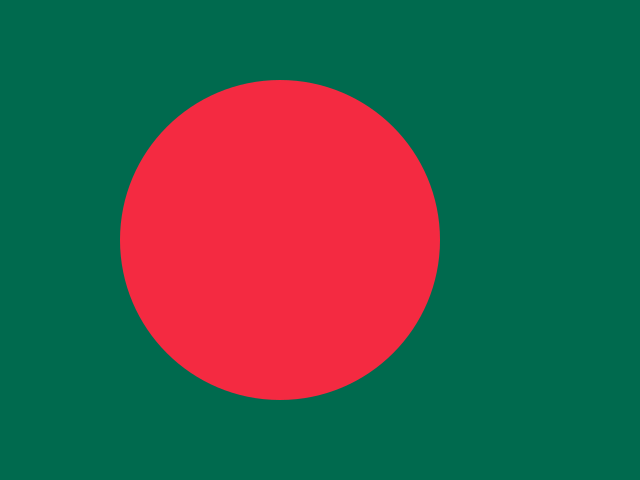
Bangladesh
Dhaka
173.6 million

Bhutan
Thimphu
791,524

Brunei
Bandar Seri Begawan
462,721
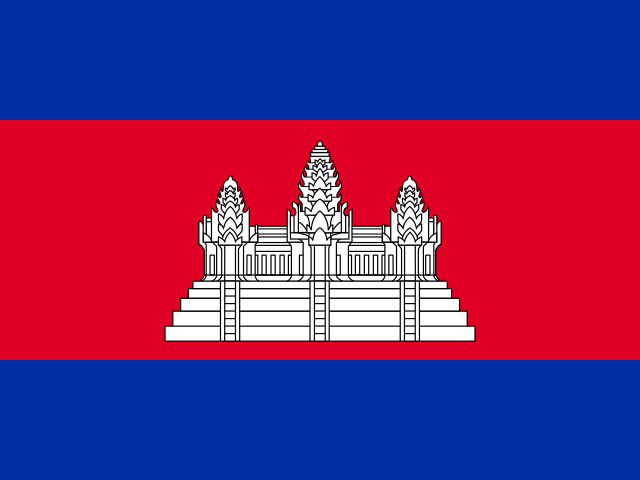
Cambodia
Phnom Penh
17.6 million
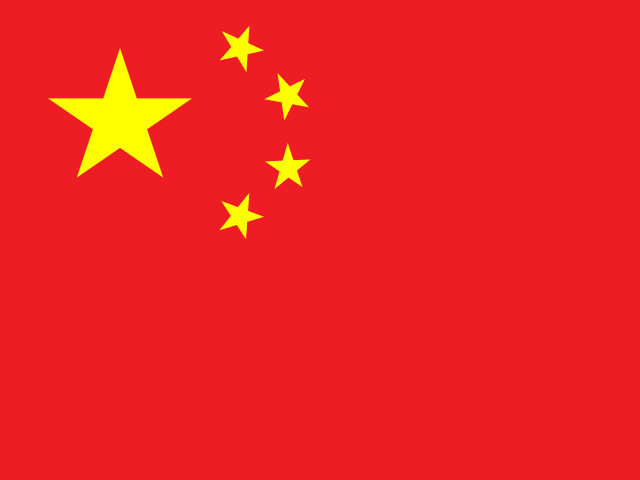
China
Beijing
1.41 billion
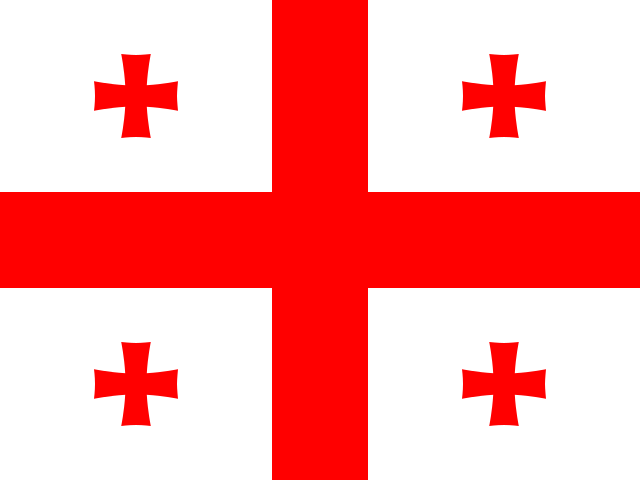
Georgia
Tbilisi
3.7 million
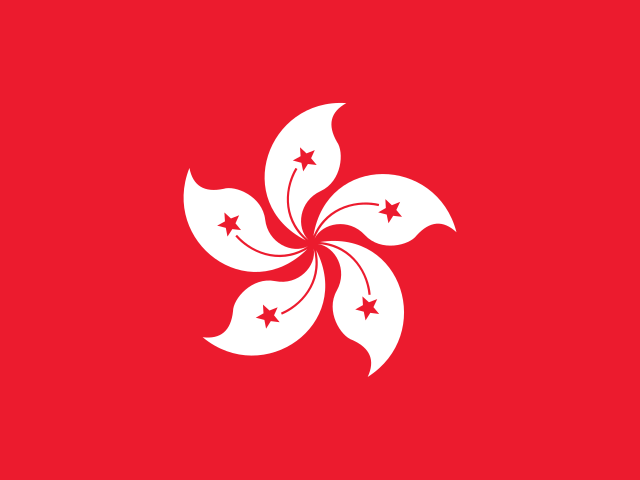
Hong Kong
City of Victoria
7.5 million
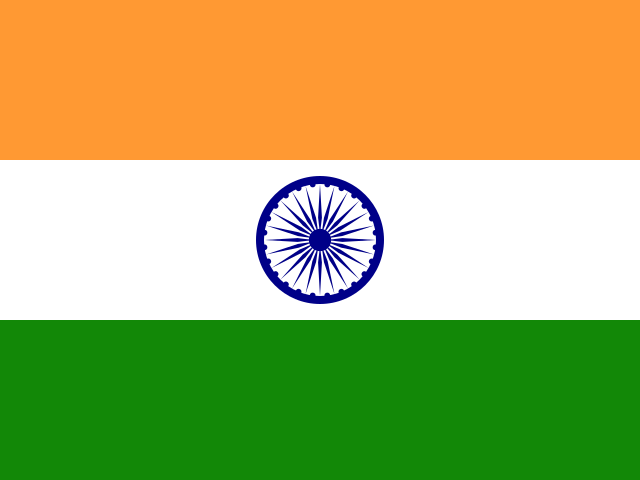
India
New Delhi
1.45 billion
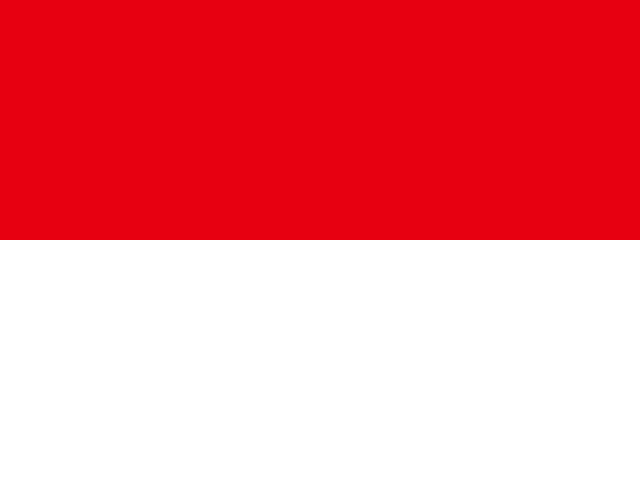
Indonesia
Jakarta
283.5 million
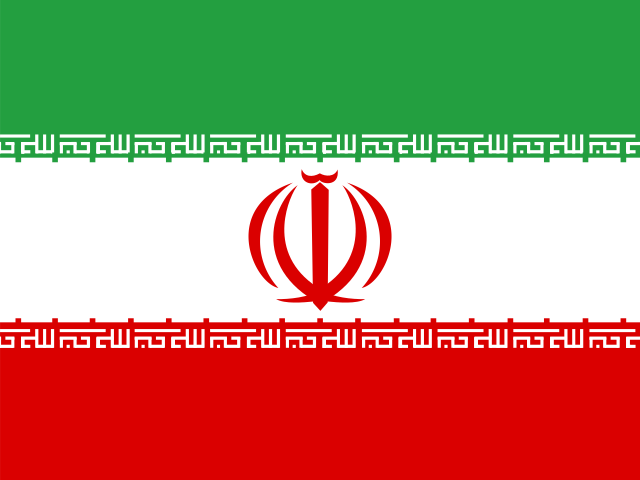
Iran
Tehran
91.6 million
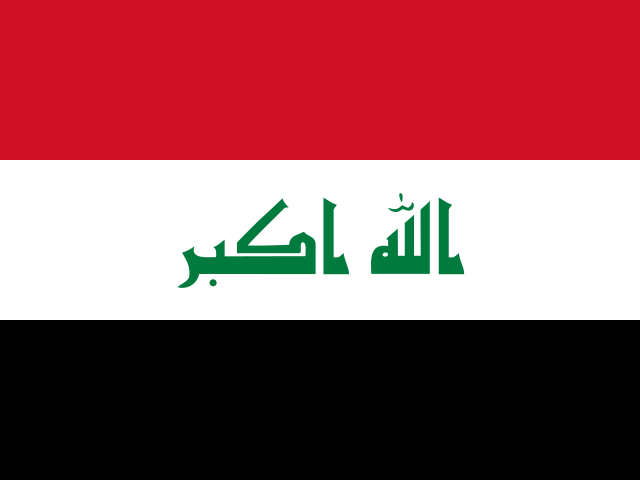
Iraq
Baghdad
46.0 million
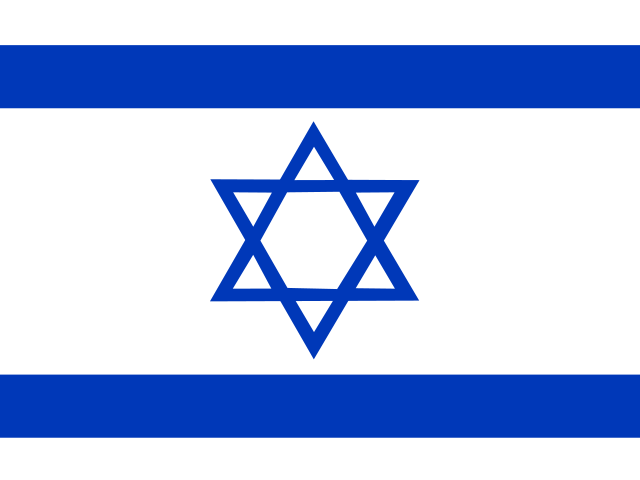
Israel
Jerusalem
10.0 million

Japan
Tokyo
124.0 million

Jordan
Amman
11.6 million

Kazakhstan
Astana
20.6 million
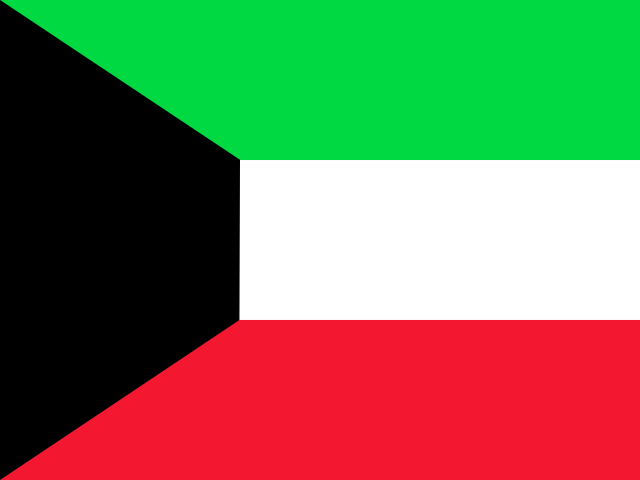
Kuwait
Kuwait City
4.9 million
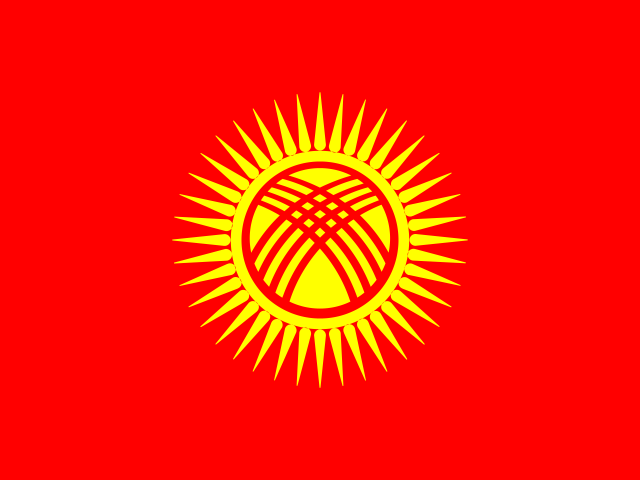
Kyrgyzstan
Bishkek
7.2 million
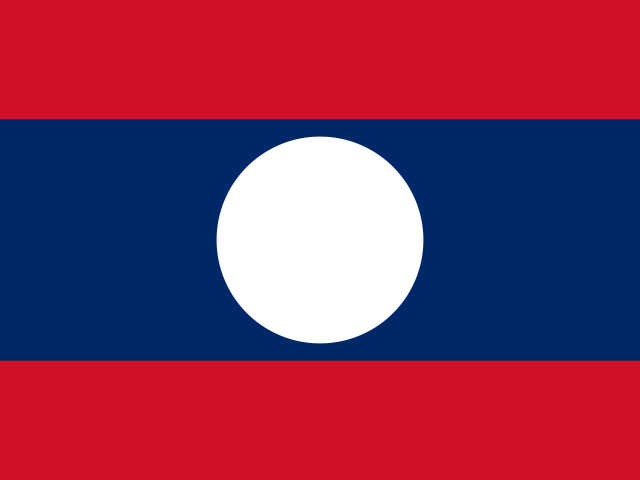
Laos
Vientiane
7.8 million

Lebanon
Beirut
5.8 million

Macau
Eastern Asia
687,000

Malaysia
Kuala Lumpur
35.6 million
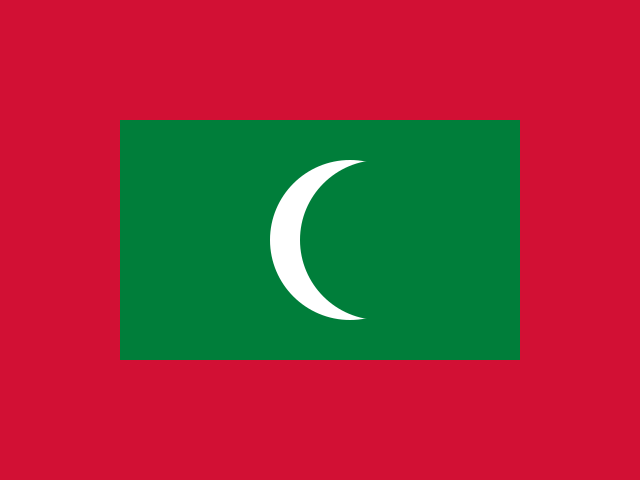
Maldives
Malé
527,799

Mongolia
Ulan Bator
3.5 million

Myanmar
Naypyidaw
54.5 million

Nepal
Kathmandu
29.7 million
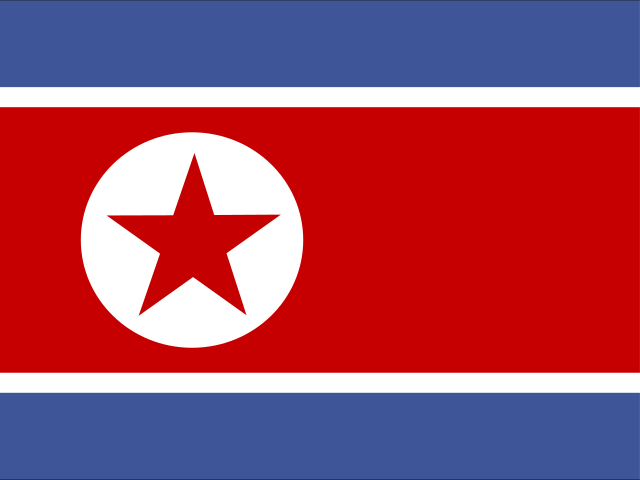
North Korea
Pyongyang
26.5 million
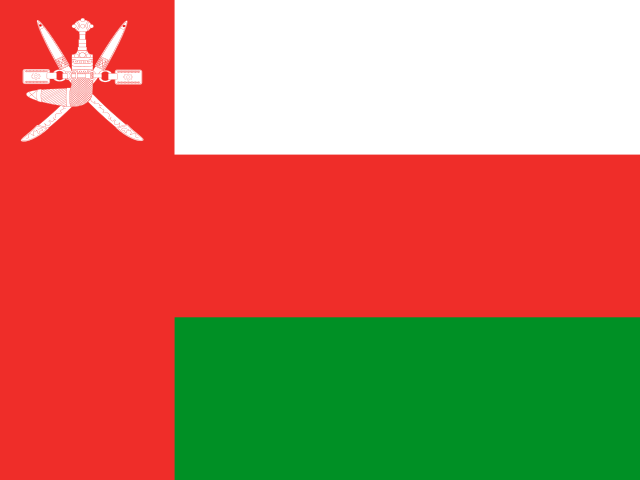
Oman
Muscat
5.3 million
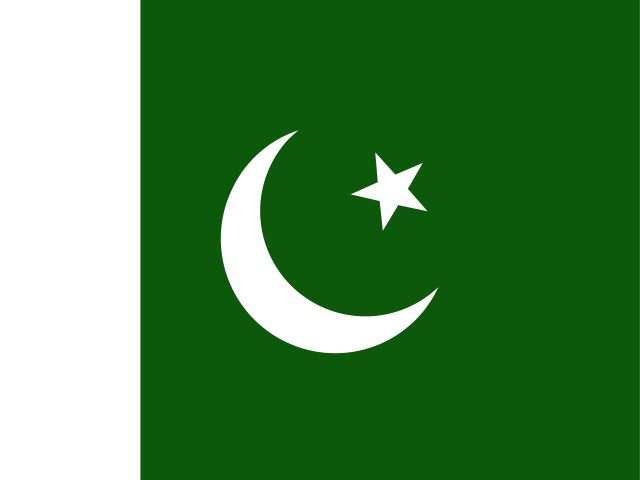
Pakistan
Islamabad
251.3 million

Palestine
Ramallah
5.3 million

Philippines
Manila
115.8 million

Qatar
Doha
2.9 million

Saudi Arabia
Riyadh
35.3 million

Singapore
Singapore
6.0 million
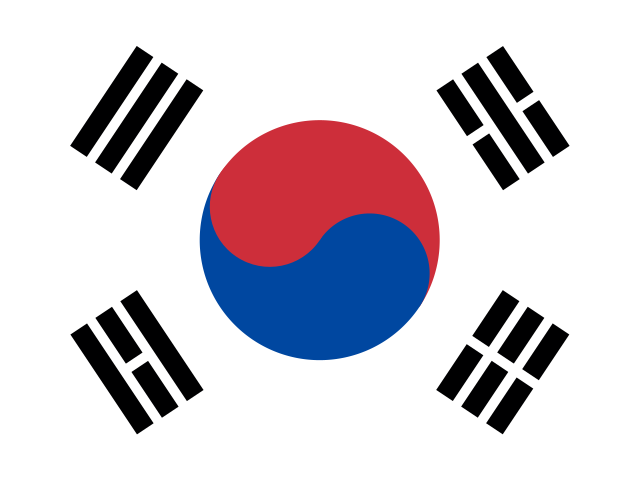
South Korea
Seoul
51.8 million

Sri Lanka
Colombo
21.9 million

Syria
Damascus
24.7 million

Taiwan
Taipei
23.4 million
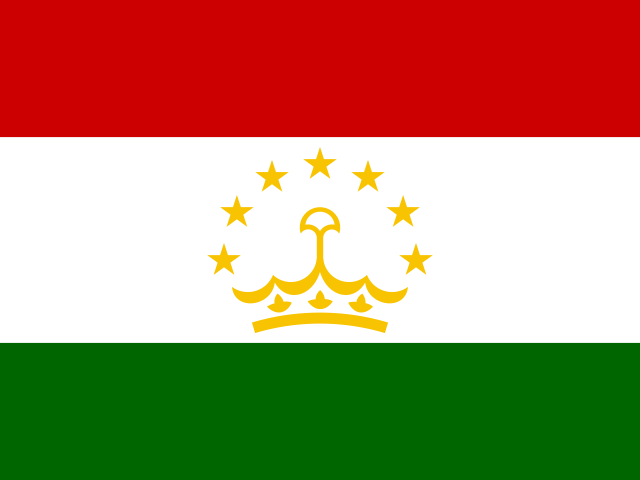
Tajikistan
Dushanbe
10.6 million
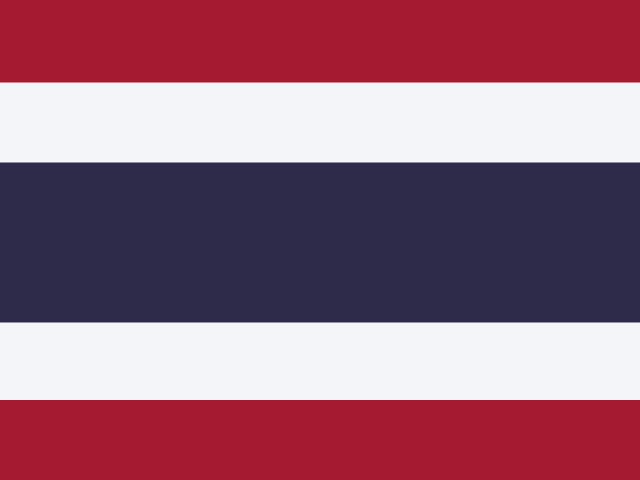
Thailand
Bangkok
71.7 million
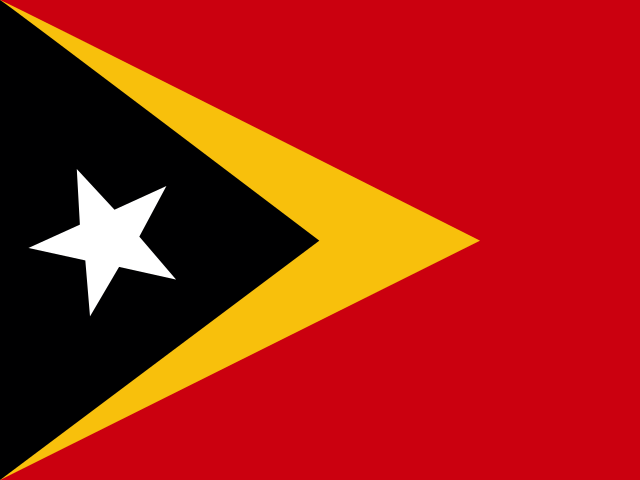
Timor-Leste
Dili
1.4 million

Türkiye
Ankara
85.5 million

Turkmenistan
Ashgabat
7.5 million

United Arab Emirates
Abu Dhabi
11.0 million
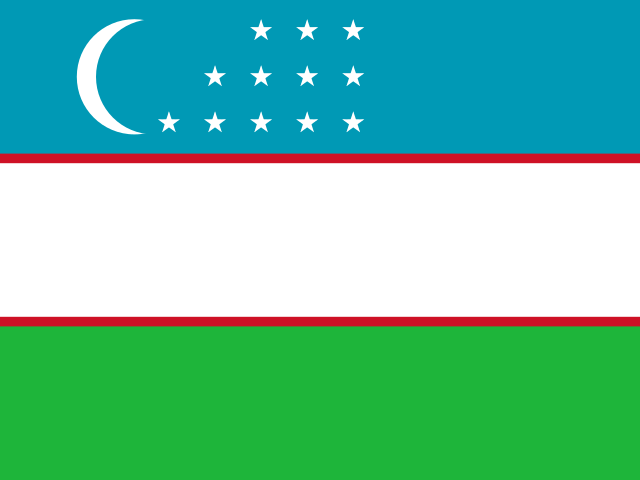
Uzbekistan
Tashkent
36.4 million

Vietnam
Hanoi
101.0 million

Yemen
Sana'a
40.6 million
Fewer countries, far more people
Asia is the outlier in every direction. It has only 50 entries on this page, fewer than Africa, the Americas or Europe, yet those 50 places hold 4.79 billion people — 58.9% of the world's population. The arithmetic is stark: an average Asian country contains roughly seven times as many people as an average European one.
That is because Asian countries are big in a way nowhere else manages. India and China each hold more than a billion people on their own. Indonesia, Pakistan and Bangladesh each hold more than the whole of Russia. Even the middle of the table is enormous — a country ranked tenth in Asia by population would rank near the top in any other region.
The land tells the same story from a different angle. 50 entries cover 32,138,141 km², and they include the highest point on Earth, the lowest exposed land on Earth, the largest landlocked country, the coldest inhabited settlement and several of the driest deserts. There is no useful sense in which Kuwait and Mongolia belong to the same climate, economy or culture; they simply share a continent.
The extremes of Asia
Largest by area
🇨🇳 China
9,706,961 km²
Smallest by area
🇲🇴 Macau
30 km²
Most populous
🇮🇳 India
1.45 billion
Fewest people
🇧🇳 Brunei
462,721
China leads on land at 9,706,961 km², with India second at 3,287,590 km² and Kazakhstan third. Kazakhstan is worth pausing on: at over 2.7 million km² it is the largest landlocked country in the world by a factor of more than two, bigger than all of Western Europe put together, with a population of just over twenty million.
India is now the most populous country in Asia and on Earth, at 1.45 billion, having passed China during 2023. The smallest entries are startlingly small by comparison: Macau covers 30 km², the Maldives 300 km² spread across more than a thousand coral islands, and Singapore 710 km² holding close to six million people. Brunei has the smallest population of any sovereign Asian state at 462,721.
How Asia divides up
Western Asia
17307.3 million people across 17 entries.
South-Eastern Asia
11695.4 million people across 11 entries.
Southern Asia
92.06 billion people across 9 entries.
Eastern Asia
81.65 billion people across 8 entries.
Central Asia
582.3 million people across 5 entries.
Five subregions, and the country counts run opposite to the population counts. Western Asia has the most entries at 17, covering Turkey, the Levant, the Arabian Peninsula and the Caucasus. South-Eastern Asia follows with 11, Southern Asia has 9, Eastern Asia 8 and Central Asia just 5.
Southern Asia's 9 countries hold about a quarter of the world's population between them, which makes it the most densely packed subregion anywhere. Central Asia's five republics — Kazakhstan, Kyrgyzstan, Tajikistan, Turkmenistan and Uzbekistan — are the reverse: vast, dry, thinly populated, and every one of them landlocked. Uzbekistan is doubly landlocked, meaning every neighbour is landlocked too, a distinction it shares only with Liechtenstein.
Languages and money across Asia
Most widespread official languages
- Arabicofficial in 13 places
- Englishofficial in 6 places
- Russianofficial in 6 places
- Chineseofficial in 5 places
- Malayofficial in 3 places
- Tamilofficial in 3 places
41 distinct official languages recorded across Asia.
Most widely used currencies
- Indian rupee (INR)2 places
- Israeli new shekel (ILS)2 places
- Jordanian dinar (JOD)2 places
- Singapore dollar (SGD)2 places
- United States dollar (USD)2 places
- Afghan afghani (AFN)1 place
50 distinct currencies in circulation across Asia.
Asia records 41 official languages here, and unlike Africa or the Americas there is no single colonial language stitching it together. Arabic is the most widespread, official in 13 entries across the Middle East. Russian follows in 6, a legacy of the Soviet Union in Central Asia and the Caucasus. English is official in 6, mostly former British territories, and Chinese in 5.
Currency is where Asia's independence shows most clearly. There are 50 distinct currencies across 50 entries — very nearly one each. There is no Asian equivalent of the euro or the CFA franc, no shared central bank, and no monetary union of any size. The handful of shared currencies are bilateral arrangements rather than blocs: Bhutan pegs to and accepts the Indian rupee, Brunei and Singapore hold their dollars at par, and a few small states peg to the US dollar without adopting it.
Compare Asia with the rest of the world
Every region has its own page built the same way, so the figures line up and you can put them side by side. The count beside each name is how many countries and territories it holds.
If you would rather not pick a region at all, the global country wheel carries all 250 entries on the site, and the full A–Z index lets you search rather than spin. The continents overview compares all six regions on one screen.
Once you know the map, test it. The capital city quiz can be filtered by region, guess the flag strips out the country names entirely, and the landlocked countries page covers the 12entries here with no coastline alongside the rest of the world's. There are longer write-ups on the blog if you want the background behind the numbers.
Asia: frequently asked questions
How many countries are there in Asia?
There are 46 sovereign countries in Asia. This page lists 50 entries in total because it also includes Hong Kong, Macau, Taiwan and Palestine, whose status is either disputed or defined as something other than an independent state. For a school answer, 48 or 49 is the figure most textbooks give, depending on how they treat Russia and Turkey, which straddle two continents.
Which is the largest country in Asia?
China, at 9,706,961 km², if you file Russia under Europe as this site does. Russia's total territory is larger and most of it lies east of the Urals, so an atlas that counts Russia as Asian would put it first. India is second in Asia and Kazakhstan third.
Which Asian country has the most people?
India, with 1.45 billion people. It overtook China during 2023 and the gap has been widening since, because China's population is now falling while India's is still growing. Together the two of them account for roughly a third of everyone on Earth.
How many Asian countries are landlocked?
12: Afghanistan, Armenia, Azerbaijan, Bhutan, Kazakhstan, Kyrgyzstan, Laos, Mongolia, Nepal, Tajikistan, Turkmenistan and Uzbekistan. Kazakhstan is the largest landlocked country in the world, and Uzbekistan is one of only two doubly landlocked countries anywhere, meaning you must cross at least two borders from it to reach an ocean.
What is the smallest country in Asia?
By area the smallest sovereign state is the Maldives at 300 km², though that land is scattered across roughly 1,200 coral islands in the Indian Ocean. The smallest entry of any kind on this page is Macau at 30 km², which is one of the most densely populated places on the planet. By population, Brunei is the smallest sovereign Asian state at 462,721.
Why does Asia have so few countries for its population?
Because its states are unusually large and unusually old. Much of Asia was governed as large empires — Chinese, Mughal, Persian, Ottoman, Russian — and when those broke up they mostly produced a small number of very big successor states rather than dozens of small ones. Africa and the Caribbean went the other way, and it shows: Asia averages roughly 96 million people per entry against 26 million in Africa.
How is the random country wheel on this page different from the main one?
This wheel is loaded only with countries from this region, so every spin lands inside it. The wheel on the main spin page carries all 250 countries and territories on the site. Use the regional wheel when you are studying one part of the world and the global one when you want a genuine surprise.
Where do these population and area figures come from?
They come from the same dataset that powers every country guide on this site, built on public country data and the most recent published estimates for population and land area. Population figures in particular are estimates and move constantly, so treat them as accurate to within a percent or two rather than to the last person.
Why does this page count territories as well as countries?
Because they are real places with flags, capitals and residents, and leaving them out would hide some of the most interesting entries on the map. Every guide states plainly whether a place is a sovereign state or a territory, and the sovereign count is given separately in the statistics above so you can use whichever number you need.
Can I use these figures in a school project?
Yes, and it is worth citing the date you looked them up, because population estimates change. If your project needs one authoritative source, cross-check the headline numbers against the UN World Population Prospects or the country's own statistics office. The rankings here — largest, smallest, most populous — are stable and safe to quote.