Countries in Europe
53 countries and territories, 744.3 million people, and the densest tangle of borders anywhere on Earth. Spin the wheel for a random European country, or browse the full list below.
12 countries are on the wheel right now.
Press Spin and the pointer decides where you are going.
Twelve of 53 countries are loaded at a time so every wedge stays readable. Shuffle for a fresh twelve, or spin the wheel you have.
Europe at a glance
53
Countries & territories
44
Sovereign states
744.3 million
Total population
9.1%
Share of world population
23,084,943 km²
Combined land area
15
Landlocked
9
No land border
49
Official languages
All countries in Europe (A–Z)
Every entry below opens a full guide with the capital, population, land area, languages, currency, neighbouring countries and a map. 44 of these 53 are sovereign states; the rest are territories, dependencies and overseas regions.
Åland Islands
Mariehamn
30,500
Albania
Tirana
2.4 million
Andorra
Andorra la Vella
81,938
Austria
Vienna
9.2 million
Belarus
Minsk
9.1 million
Belgium
Brussels
11.9 million
Bosnia and Herzegovina
Sarajevo
3.2 million
Bulgaria
Sofia
6.4 million
Croatia
Zagreb
3.9 million
Cyprus
Nicosia
1.4 million
Czechia
Prague
10.9 million
Denmark
Copenhagen
6.0 million
Estonia
Tallinn
1.4 million
Faroe Islands
Tórshavn
54,681
Finland
Helsinki
5.6 million
France
Paris
68.6 million
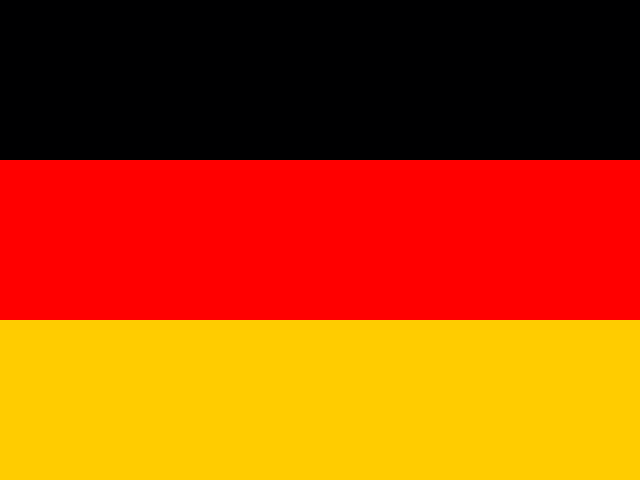
Germany
Berlin
83.5 million
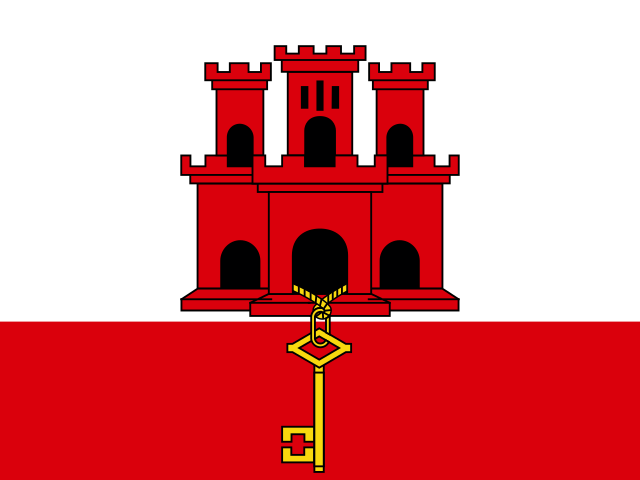
Gibraltar
Gibraltar
39,329
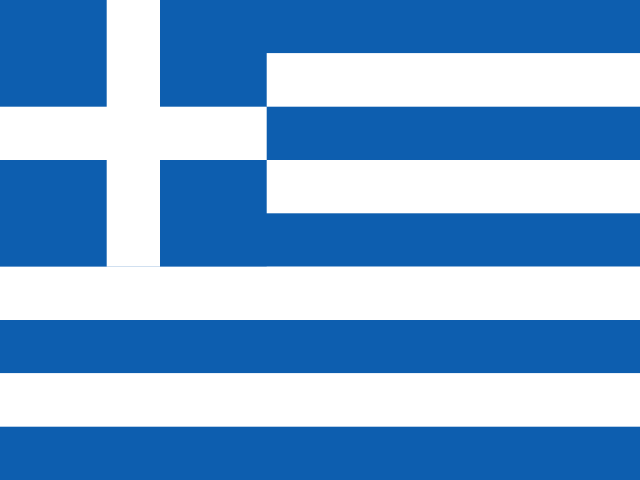
Greece
Athens
10.4 million
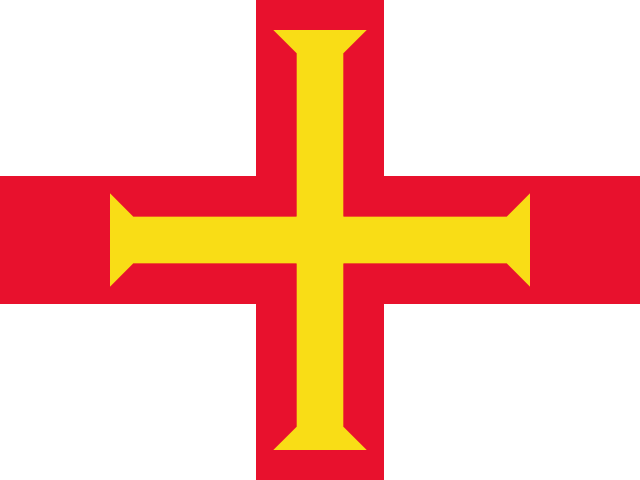
Guernsey
St. Peter Port
64,000
Hungary
Budapest
9.6 million
Iceland
Reykjavik
386,506
Ireland
Dublin
5.4 million
Isle of Man
Douglas
84,160
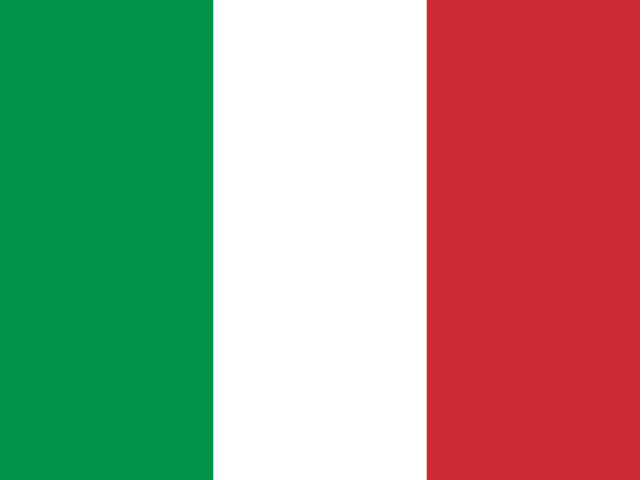
Italy
Rome
59.0 million
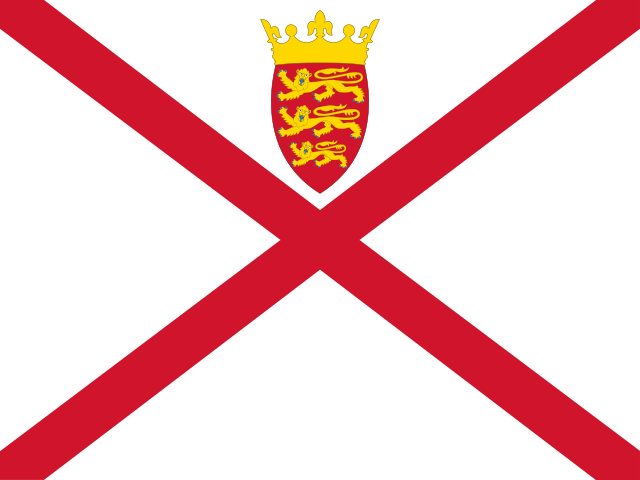
Jersey
Saint Helier
103,000
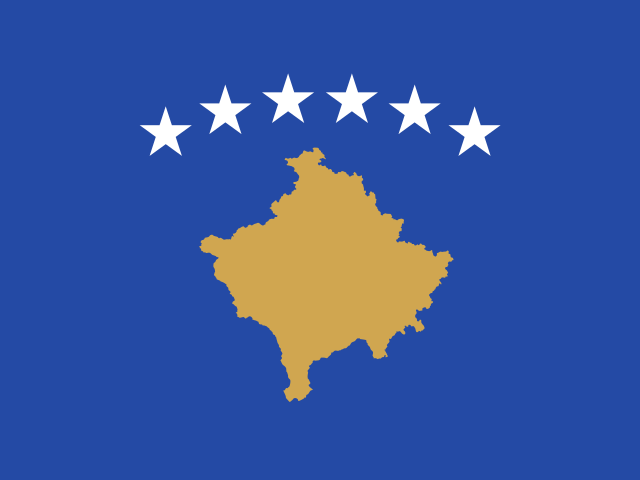
Kosovo
Pristina
1.8 million
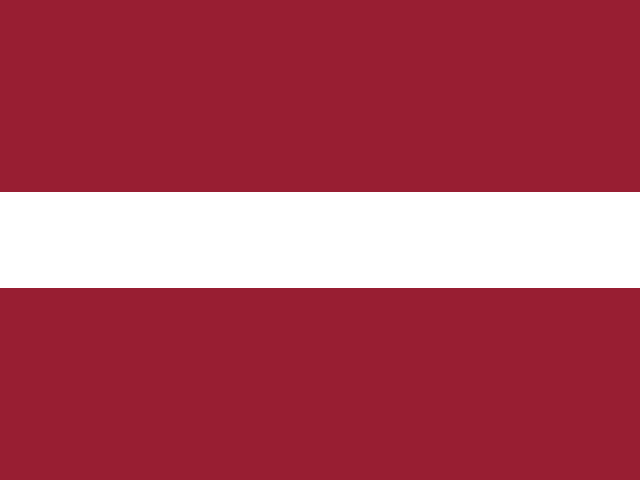
Latvia
Riga
1.9 million
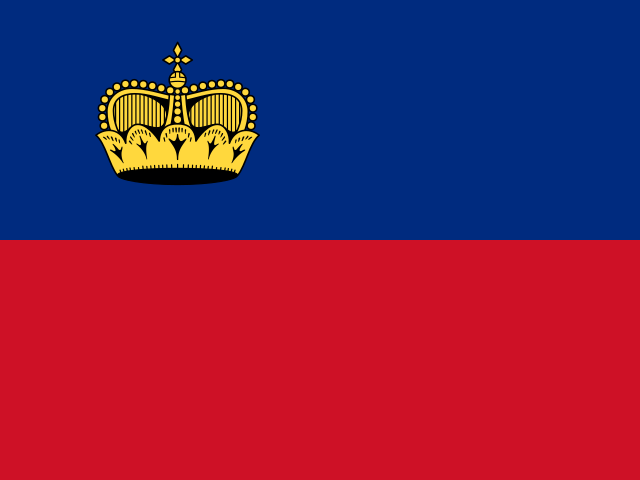
Liechtenstein
Vaduz
40,450
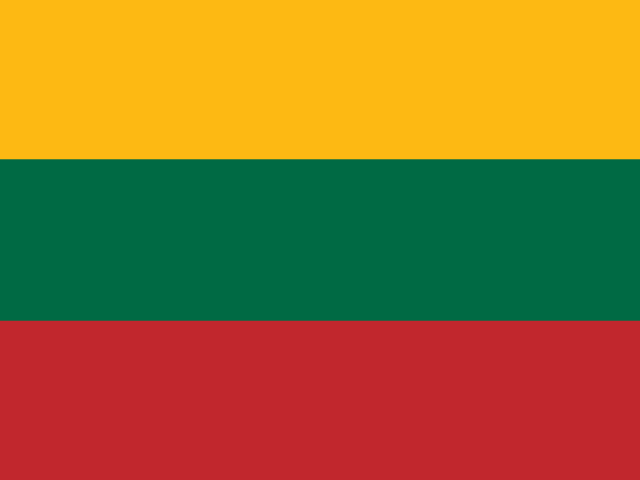
Lithuania
Vilnius
2.9 million
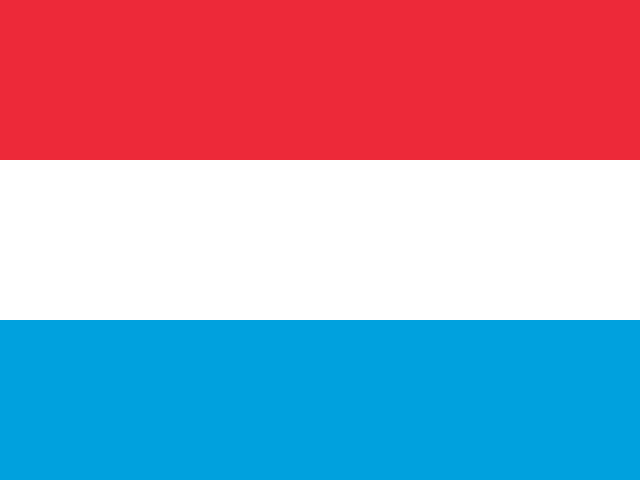
Luxembourg
Luxembourg
677,012
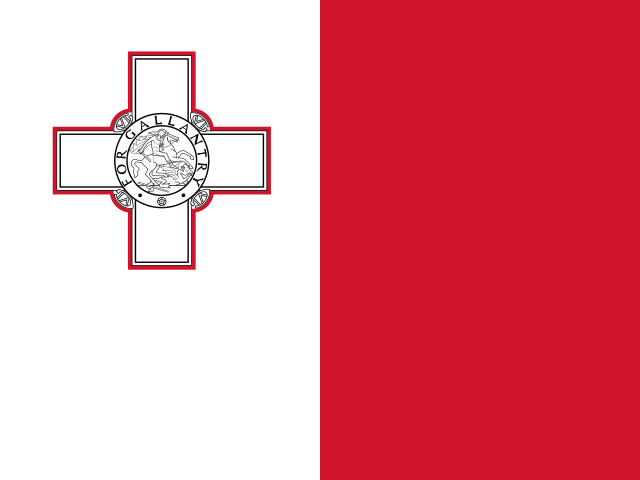
Malta
Valletta
568,847
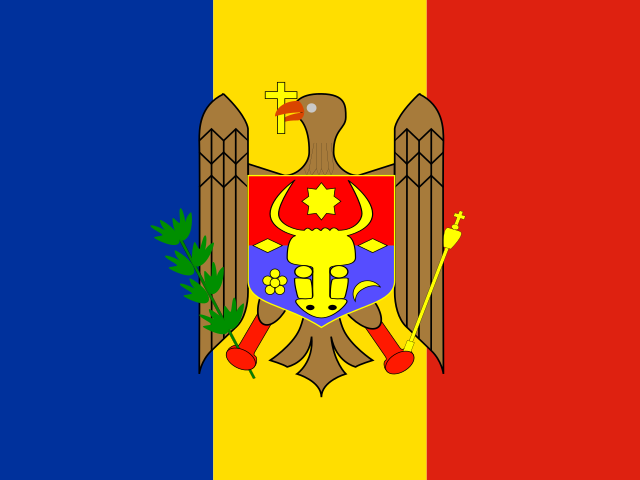
Moldova
Chișinău
2.4 million
Monaco
Monaco
38,631
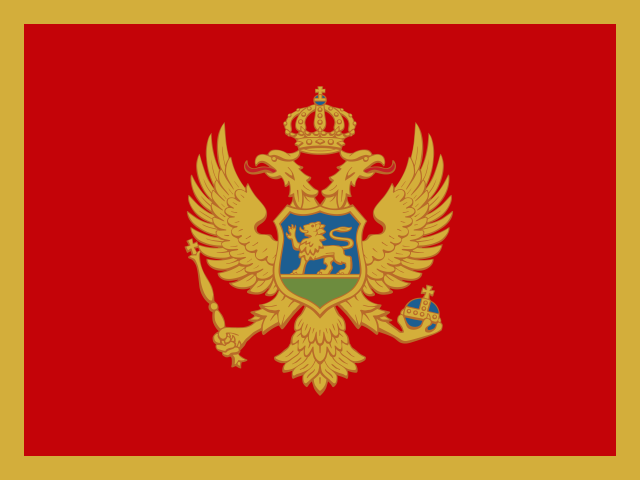
Montenegro
Podgorica
623,525
Netherlands
Amsterdam
18.0 million
North Macedonia
Skopje
1.8 million
Norway
Oslo
5.6 million
Poland
Warsaw
36.6 million
Portugal
Lisbon
10.7 million
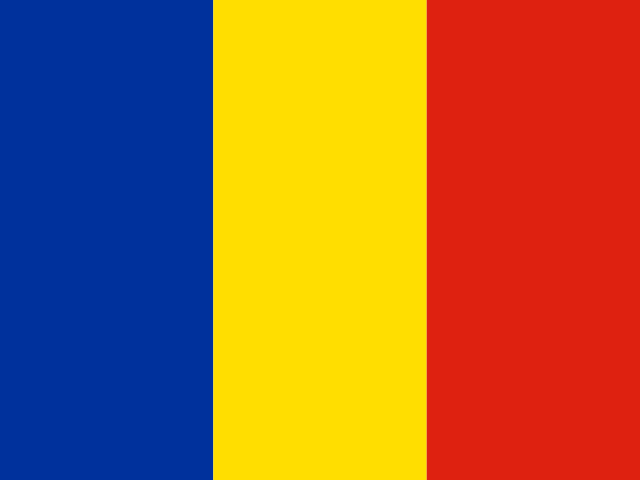
Romania
Bucharest
19.1 million
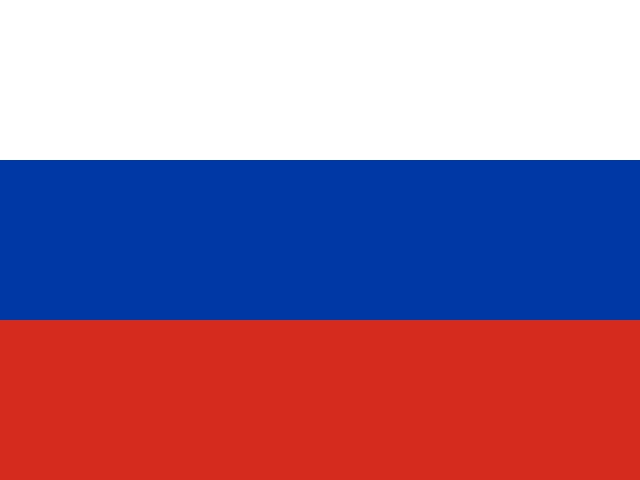
Russia
Moscow
143.5 million
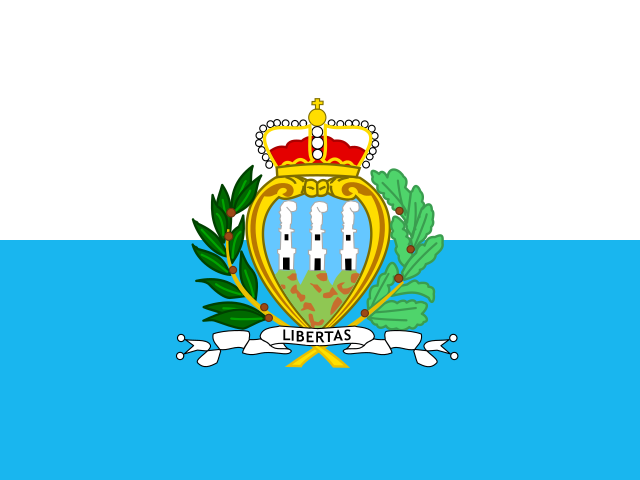
San Marino
City of San Marino
33,977
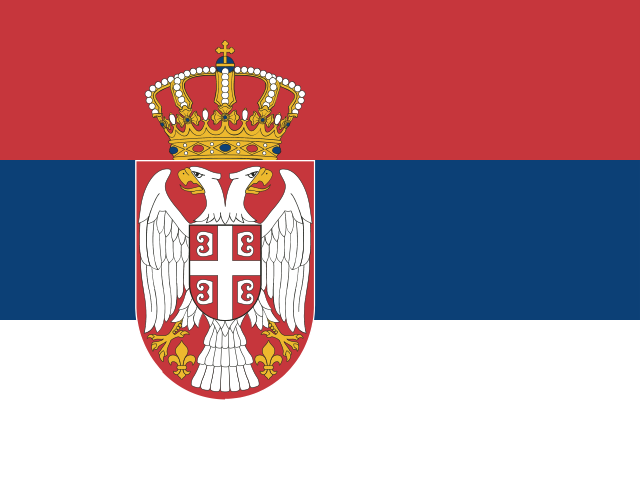
Serbia
Belgrade
6.6 million
Slovakia
Bratislava
5.4 million
Slovenia
Ljubljana
2.1 million
Spain
Madrid
48.8 million
Svalbard and Jan Mayen
Longyearbyen
2,900
Sweden
Stockholm
10.6 million
Switzerland
Bern
9.0 million
Ukraine
Kyiv
37.9 million
United Kingdom
London
69.2 million
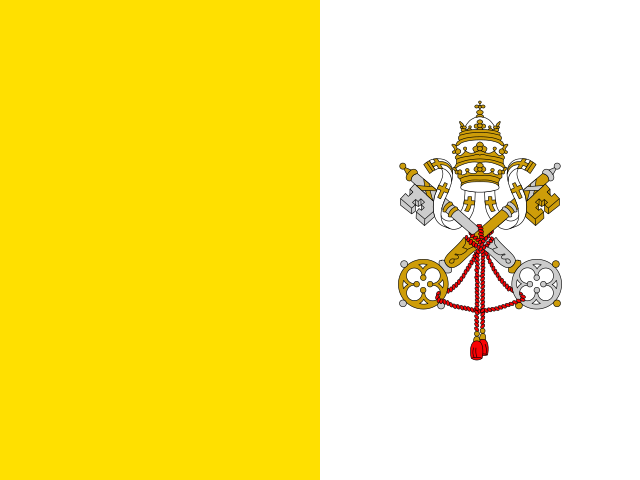
Vatican City
Vatican City
800
Small countries, hard borders, many languages
Europe holds 53 countries and territories and 744.3 million people, which is 9.1% of the world's population. What it lacks in size it makes up for in fragmentation: outside Russia, no European country reaches a million square kilometres, and several are small enough to walk across in a morning.
The area figure on this page needs a caveat. It comes to 23,084,943 km², but 17,098,242 km² of that is Russia, which this dataset files under Europe even though roughly three-quarters of Russian territory lies east of the Ural Mountains in Asia. Strip Russia out and Europe is a compact continent — smaller than Canada, and about the size of Australia plus India.
Density of borders is the defining European fact. 15 of the 53 entries here are landlocked, the highest proportion of any region, and a further 9 have no land border at all because they are islands. Everything in between is packed tightly enough that a single day's drive can cross three countries and three languages, which is exactly why the continent spent so much of its history at war with itself and so much of the last seventy years building institutions to stop that happening again.
The extremes of Europe
Largest by area
🇷🇺 Russia
17,098,242 km²
Smallest by area
🇻🇦 Vatican City
0.44 km²
Most populous
🇷🇺 Russia
143.5 million
Fewest people
🇻🇦 Vatican City
800
Russia dominates both lists: largest by area at 17,098,242 km² and most populous at 143.5 million. After that the drop is severe. Ukraine is second largest at 603,500 km², less than four per cent of Russia's territory, and Germany is second most populous at 83.5 million.
The small end is where Europe gets genuinely unusual. Vatican City covers 0.44 km² with about 800 residents, making it the smallest state in the world by both measures. Monaco follows at roughly 2 km², San Marino at 61 km², Liechtenstein at 160 km². Four of the six smallest sovereign states on Earth are European; the other two, Nauru and Tuvalu, are in Oceania.
How Europe divides up
Northern Europe
16109.2 million people across 16 entries.
Southern Europe
10131.0 million people across 10 entries.
Southeast Europe
945.7 million people across 9 entries.
Western Europe
8191.7 million people across 8 entries.
Central Europe
673.8 million people across 6 entries.
Eastern Europe
4192.9 million people across 4 entries.
Six subregions, and the largest by count is Northern Europe with 16 entries — a figure inflated by the Nordic and British island territories such as the Faroes, Åland, Jersey, Guernsey, the Isle of Man and Svalbard. Southern Europe has 10, Southeast Europe 9, Western Europe 8, Central Europe 6 and Eastern Europe just 4.
Southeast Europe holds the youngest political map on the continent. Six of its 9 entries — Bosnia and Herzegovina, Croatia, Kosovo, Montenegro, North Macedonia and Serbia — did not exist in their present form in 1990. Yugoslavia broke into seven states over the two decades that followed, and the process only finished in 2008 with Kosovo's declaration of independence, which a substantial number of countries still decline to recognise. Add the split of Czechoslovakia in 1993 and a sizeable share of the European map learned at school before 1991 has since been redrawn.
Languages and money across Europe
Most widespread official languages
- Englishofficial in 7 places
- Frenchofficial in 7 places
- Germanofficial in 4 places
- Italianofficial in 4 places
- Serbianofficial in 3 places
- Swedishofficial in 3 places
49 distinct official languages recorded across Europe.
Most widely used currencies
- Euro (EUR)28 places
- British pound (GBP)4 places
- Danish krone (DKK)2 places
- Swiss franc (CHF)2 places
- Albanian lek (ALL)1 place
- Belarusian ruble (BYN)1 place
24 distinct currencies in circulation across Europe.
Europe records 49 official languages, more than any other region in this dataset, on the smallest inhabited landmass of the six. That density is the whole reason the European Union runs one of the largest translation operations in the world. The most widely shared are French, official in 7 entries, and English in 7 — both figures boosted by small territories rather than large states.
Currency runs in the exact opposite direction. Europe uses only 24 distinct currencies across its 53 entries — against 49 in Africa and 50 in Asia — because 28 of them use the euro. Several of those use it without being members of the eurozone at all — Andorra, Monaco, San Marino, Vatican City, Montenegro and Kosovo have adopted it unilaterally or by agreement. After the euro, the British pound is the most widely used, appearing in 4 entries once the Crown Dependencies are counted.
Compare Europe with the rest of the world
Every region has its own page built the same way, so the figures line up and you can put them side by side. The count beside each name is how many countries and territories it holds.
If you would rather not pick a region at all, the global country wheel carries all 250 entries on the site, and the full A–Z index lets you search rather than spin. The continents overview compares all six regions on one screen.
Once you know the map, test it. The capital city quiz can be filtered by region, guess the flag strips out the country names entirely, and the landlocked countries page covers the 15entries here with no coastline alongside the rest of the world's. There are longer write-ups on the blog if you want the background behind the numbers.
Europe: frequently asked questions
How many countries are there in Europe?
Most references say 44 or 50, and this page lists 53 entries of which 44 are sovereign states. The spread of answers comes down to three arguments: whether to count Russia and Turkey, which straddle Europe and Asia; whether to count Kosovo, which is not universally recognised; and whether to count Crown Dependencies and island territories such as Jersey, the Faroe Islands and Gibraltar. This page includes all of them and labels each one honestly.
What is the smallest country in Europe?
Vatican City, at 0.44 km² with roughly 800 residents. It is also the smallest country in the world by both land area and population. Monaco is second at about 2 km², then San Marino at 61 km² and Liechtenstein at 160 km². All four are European, which is why "smallest country" trivia so often has a European answer.
How many European countries are landlocked?
15 of the entries on this page: Andorra, Austria, Belarus, Czechia, Hungary, Kosovo, Liechtenstein, Luxembourg, Moldova, North Macedonia, San Marino, Serbia, Slovakia, Switzerland and Vatican City. That is the highest proportion of any region on the site. Liechtenstein is one of only two doubly landlocked countries in the world — every one of its neighbours is landlocked too.
How many European countries use the euro?
28 of the 53 entries on this page use the euro as their currency, which is far more than the number of formal eurozone members. Andorra, Monaco, San Marino and Vatican City use it under monetary agreements with the EU, while Montenegro and Kosovo adopted it unilaterally. Several French overseas territories in Europe use it as well.
Is Russia in Europe or Asia?
Both, and this site files it under Europe. About three-quarters of Russian territory lies east of the Ural Mountains in Asia, but roughly three-quarters of Russians live west of them, and Moscow and Saint Petersburg are both European cities. Its 17,098,242 km² makes it the largest country in the world and it single-handedly accounts for most of the land area credited to Europe on this page.
Which European country has the most people?
Russia, at 143.5 million, followed by Germany at 83.5 million. If Russia is excluded on the grounds that most of its land is Asian, Germany leads, with the United Kingdom and France close behind and Italy fourth. Europe's population is close to flat overall and falling in a majority of its countries.
How is the random country wheel on this page different from the main one?
This wheel is loaded only with countries from this region, so every spin lands inside it. The wheel on the main spin page carries all 250 countries and territories on the site. Use the regional wheel when you are studying one part of the world and the global one when you want a genuine surprise.
Where do these population and area figures come from?
They come from the same dataset that powers every country guide on this site, built on public country data and the most recent published estimates for population and land area. Population figures in particular are estimates and move constantly, so treat them as accurate to within a percent or two rather than to the last person.
Why does this page count territories as well as countries?
Because they are real places with flags, capitals and residents, and leaving them out would hide some of the most interesting entries on the map. Every guide states plainly whether a place is a sovereign state or a territory, and the sovereign count is given separately in the statistics above so you can use whichever number you need.
Can I use these figures in a school project?
Yes, and it is worth citing the date you looked them up, because population estimates change. If your project needs one authoritative source, cross-check the headline numbers against the UN World Population Prospects or the country's own statistics office. The rankings here — largest, smallest, most populous — are stable and safe to quote.